
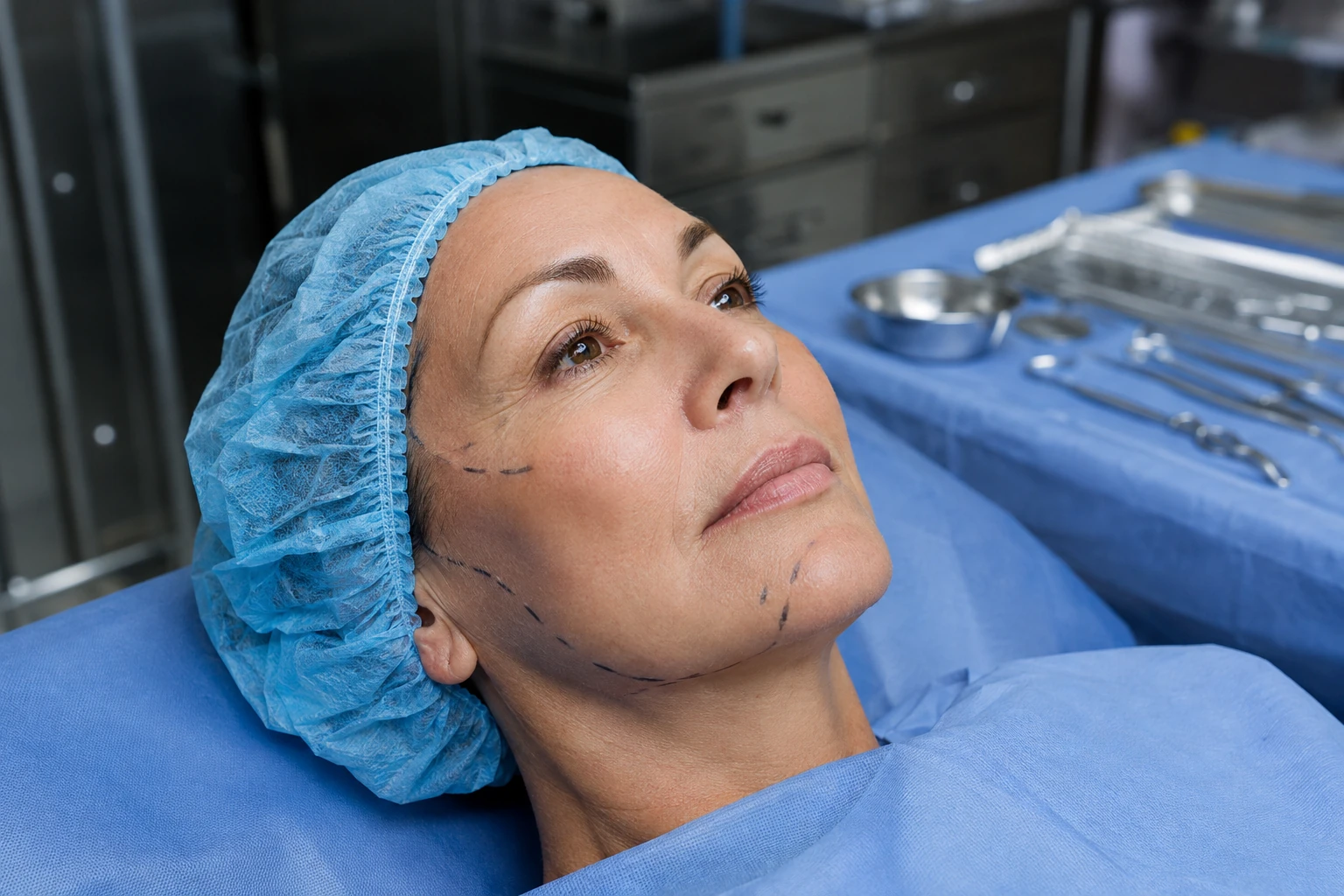
If you are considering a facelift, understanding surgical facelift cost is an important part of planning your treatment. However, the price can vary considerably because the procedure is tailored to each patient’s facial structure, concerns, and desired outcome.
This guide explains what a surgical facelift involves, the factors that influence facelift cost, what may be included in a quote, and how surgical and non-surgical facelift options compare.
What Is a Surgical Face Lift?
A surgical facelift is a procedure designed to address visible signs of facial aging, including sagging skin, jowls, and changes in facial contours. During surgery, the skin and underlying facial tissues are repositioned, while excess skin may be removed. Incisions are carefully placed to help minimize their visibility as healing progresses.
Unlike treatments that mainly improve skin quality or add volume, a facelift can address more significant tissue laxity. The appropriate approach depends on your facial anatomy, the areas you want to improve and the results you hope to achieve.
A surgical facelift is different from a non-surgical facelift, which may involve treatments such as dermal fillers, wrinkle injections, or other skin rejuvenation procedures. These options may provide temporary improvements without the incisions and recovery associated with surgery.
What Factors Affect Surgical Face Lift Cost?
There is no single price for a surgical facelift because several components contribute to the overall cost. Your quote may be influenced by:
- The type and extent of surgery, such as a mini facelift cost, lower, mid or full facelift.
- The surgeon’s qualifications, experience and expertise.
- Hospital or accredited surgical facility fees.
- Anaesthesia and anaesthetist fees.
- Pre-operative consultations, examinations and medical assessments.
- Post-operative consultations, assessments and follow-up care.
- The complexity of your procedure and facial anatomy.
- Additional procedures performed during the same operation.
For example, the full face lift cost may differ from the lower face lift cost because the treatment covers different areas and may involve a different surgical approach. Similarly, the mid facelift cost can vary depending on the extent of treatment and the patient’s individual needs.
Additional procedures may also affect the total. Some patients may choose to combine a facelift with a surgical brow lift or upper and lower eye lift, depending on their concerns and suitability. Other procedures, such as rhinoplasty, scar removal, or blepharoplasty, may be considered separately following professional assessment.
A personal consultation is necessary to determine the suitability of these procedures. Surgery carries risk, and the doctor will explain everything during the consultation. Results usually vary for each person.
How Much Does a Face Lift Cost?
It is difficult to provide one fixed facelift cost because there is no standard procedure that suits every patient. The final fee is determined after an individual consultation, when your surgeon can assess your facial structure, discuss your goals and recommend an appropriate treatment plan.
When reviewing a quote, ask what the surgical fee includes and whether other expenses are separate. Depending on the practice and procedure, you may need to clarify whether the quote covers:
- Surgeon’s fees
- Facility or hospital fees
- Anaesthesia and anaesthetist fees
- Pre-operative assessments
- Post-operative appointments and care
Comparing quotes based only on the lowest price can be misleading. A more useful comparison is to consider the full scope of treatment, the surgeon’s qualifications and experience, the facility where the surgery is performed, and the level of care provided before and after the procedure.
Surgical Face Lift vs Non Surgical Face Lift Cost
Surgical and non-surgical approaches differ in their purpose, cost, and recovery time. A surgical facelift usually has a higher upfront cost and requires a period of recovery. It may be considered for patients with more noticeable facial sagging, while the longevity of results can vary between individuals. A non-surgical facelift may involve less downtime, depending on the treatment chosen, although the results and their duration can also vary between individuals.
The non-surgical facelift cost can vary depending on whether you choose dermal fillers, wrinkle treatments, laser skin rejuvenation, or a combination of procedures. The number of treatment sessions required can also influence the overall cost.
When comparing the two options, it is important to look beyond the upfront cost. Non-surgical treatments may need to be repeated to maintain the results, so the cost can add up over time. Surgery generally involves a higher upfront cost and a period of recovery, while the duration of results can vary between individuals.
Conclusion
Choosing facial rejuvenation is a personal decision, and cost is only one factor to consider. A surgical facelift is an invasive procedure and, like any surgery, carries risks. Recovery can involve swelling, bruising and discomfort, and results can vary between patients. Your surgeon can explain the potential risks, recovery, and aftercare involved during your consultation.
If you are considering a facelift and want to understand your treatment options and potential costs, contact Dr Alan Evans on (02) 9526 8000 to arrange a consultation. A consultation can help determine whether a facelift is suitable for your individual concerns and circumstances.