
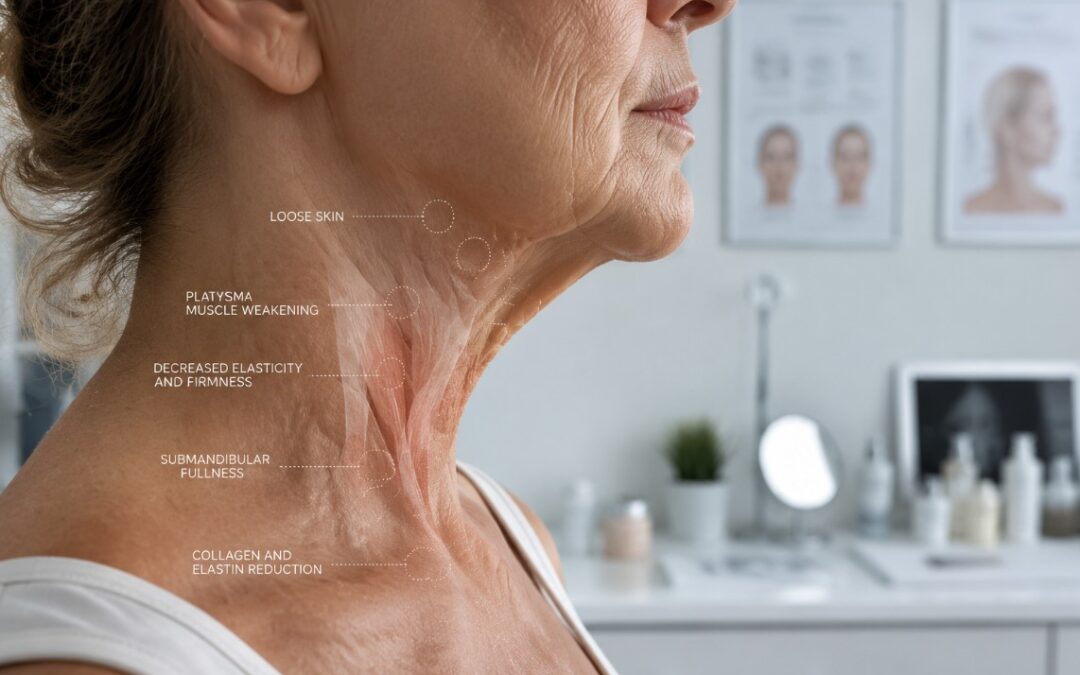
Most people know what a turkey neck is: the loose, sagging skin under the chin and along the neck that becomes more noticeable with age. It develops slowly, which is why it can seem to appear suddenly. One day, your jawline looks defined, and the next, it seems to have changed.
Several factors can cause a saggy neck. Skin loses its elasticity. The platysma muscle, which runs down the neck, starts to loosen and separate, forming visible bands. Fat can also build up under the chin, making the jaw and neck blend together. These changes happen together, so the overall effect can seem greater than any one cause alone.
Confidence matters here as well. Many people say it is not about vanity, but about their neck no longer matching how they feel inside. That difference between how you feel and how you look is important to address.
In this blog, we talk about causes as well as turkey neck treatment.
What Causes a Turkey Neck?
The main cause is natural aging, but it helps to know what happens in the skin. Collagen and elastin, which keep skin firm and elastic, start to decrease from your mid-thirties. As these proteins decrease, skin loses its bounce and starts to hang rather than stay tight.
Muscle weakening adds to the problem. The platysma muscle under the neck skin slowly loses its tone. When it separates in the middle, it produces the bands typical of turkey necks. At the same time, fat can build up under the chin, adding fullness where it is not wanted.
Genetics also play a big role, often more than people realise. Some people keep a firm neck into their sixties, while others notice sagging much earlier. Your family history can be a good clue.
Age-Related Changes That Contribute to Turkey Neck
As we age, several changes happen together that affect the lower face and neck. Skin can become loose unevenly, and sometimes the neck loses firmness before the face does. Neck bands may stand out more, especially when you talk or turn your head. The jawline can lose its sharpness as bones, fat, and ligaments change over time. Facial volume also moves downward, which can make things worse.
Lifestyle Factors That Can Worsen Turkey Neck
Certain lifestyle habits can speed up the effects of aging. Gaining and losing weight over and over stretches the skin, and it may not fully bounce back. Poor posture, especially from leaning forward at screens, puts extra strain on the neck and can make the skin loosen faster over time.
People often overlook the effects of sun exposure. Sun damage breaks down collagen in the top layer of skin, leading to thin, loose skin on the neck, which many forget to protect with sunscreen.
Smoking also accelerates skin ageing by reducing blood flow and collagen production, leading to more sagging in the face and neck.
Signs and Symptoms of Turkey Neck
The presentation varies by severity, but common signs include:
- Loose or hanging skin beneath the chin and along the neck
- Visible vertical neck bands, especially during movement
- A double chin appearance from submental fat
- Loss of a clear angle between the jaw and neck
- Wrinkled or crepey skin texture on the neck
Can Turkey Neck Be Prevented?
You cannot fully prevent turkey neck, but your daily habits do make a difference. Maintaining a steady, healthy weight helps prevent skin stretching.
Using sunscreen on your neck every day, not just your face, really helps over time. A regular skincare routine with peptides or retinoids can support collagen, though the results are usually mild.
Good posture is also more important than most people think.
Non-Surgical Treatments for Turkey Neck
There are several non-surgical treatments for mild to moderate turkey neck. Devices that use lasers, radiofrequency or ultrasound can help tighten skin by stimulating collagen production.
Injectables, like anti-wrinkle treatments and some biostimulators, can help with bands and early sagging. Laser treatments can also improve skin texture and mild looseness.
It is important to know that non-surgical treatments work best for early changes. If you have more severe sagging or pronounced muscle bands, these treatments usually yield only limited, short-term results.
When Is Surgery the Best Option?
Turkey neck surgery becomes the most appropriate path when:
- Sagging is moderate to severe and not responding to non-surgical approaches
- Excess skin is present that cannot realistically be tightened otherwise
- The patient wants results that last years, not months
- Expectations are realistic and grounded in a proper surgical consultation
Surgical Options for Correcting Turkey Neck
Turkey neck removal through surgery typically involves a neck lift, sometimes combined with a lower facelift for comprehensive lower facial rejuvenation. Liposuction addresses excess submental fat where that’s a contributing factor.
Combination procedures, pairing a neck lift with a surgical brow lift or blepharoplasty in Sydney, are common for patients seeking broader facial harmony.
Patients exploring facial surgery more broadly sometimes consider rhinoplasty in Sydney, or a nose job in Sydney, during the same period, though these are separate procedures with their own recovery timelines.
How a Neck Lift Surgery Works
A neck lift focuses on the areas causing the problem. Excess skin is removed, and the underlying platysma muscle is tightened. If there are bands, they are treated during surgery. The jawline is reshaped to create a clearer angle between the chin and neck.
When done well, the result is a smoother, younger-looking neck that appears natural rather than tight or artificial. The results last a long time, which is why many consider surgery the best treatment for turkey neck. It can make you look noticeably younger for years.
Remember, all surgery has risks. So, a personalized consultation with a qualified practitioner is crucial before making any decision.
Are you considering surgery for your turkey neck?
Whether you’re thinking of surgical or non-surgical interventions to address your turkey neck, Dr Alan Evans offers personal consultations at his Miranda clinic. Call (02) 9526 8000 or book online to discuss your options with him and get the best recommendation suited for you.