
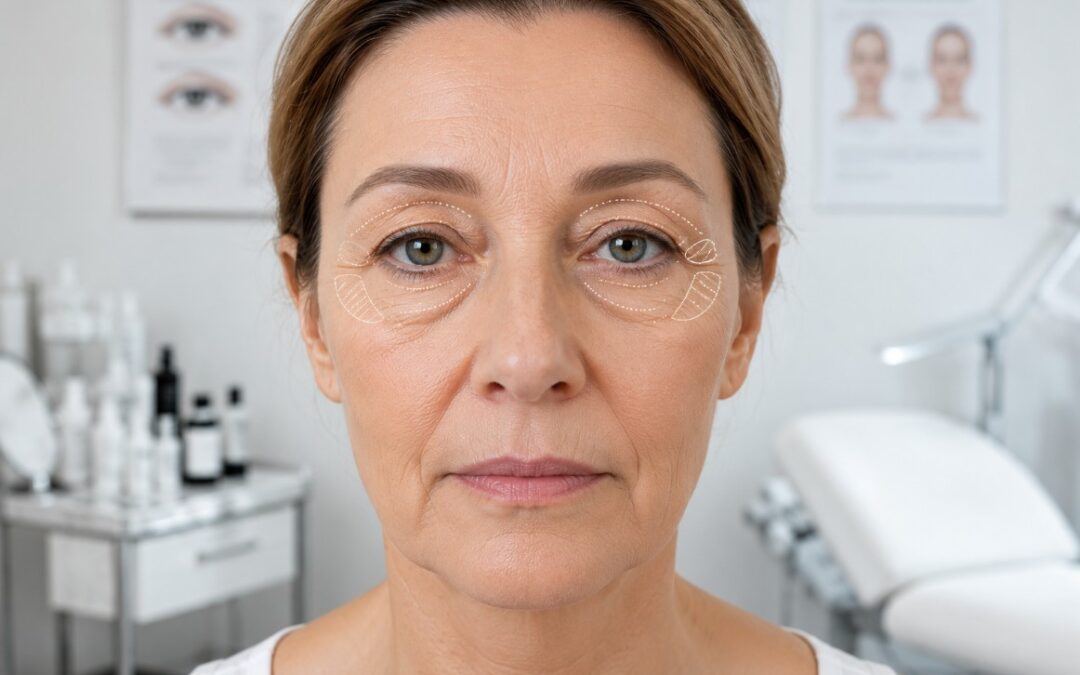
Blepharoplasty recovery isn’t a single event, but a process. The body repairs surgical tissue in stages: first closing the wound, then reducing inflammation, and finally remodelling the skin over weeks and months.
How quickly someone moves through those stages depends on factors like overall health, age, whether they smoke, and how closely they follow post-operative care instructions.
It is also worth noting that recovery of the upper and lower eyelids can feel quite different. Upper eyelid healing tends to be more straightforward. Lower eyelid work, particularly if fat repositioning was involved, can involve more prolonged swelling and a slightly longer adjustment period.
This blog focuses on everything you should know about the recovery journey after blepharoplasty.
Blepharoplasty Immediate Recovery: The First 24 Hours
The first day after surgery is usually the hardest, at least in terms of how unfamiliar everything can feel. Most patients experience significant swelling and bruising almost immediately, and the eyelids feel heavy. Vision may seem blurry, partly from swelling and partly from any lubricating ointment applied during the procedure. That’s normal.
Discomfort is generally manageable and is typically described as a dull, tight ache rather than sharp pain. Rest is genuinely important here, not just advised. Cold compresses, keeping the head elevated, and avoiding screens all make a real difference in how the first 48 hours unfold. Most people are surprised by how little they feel like doing anything, and that’s probably the right instinct.
Swelling After Blepharoplasty
Swelling is the body’s immediate response to tissue disruption. It’s not a sign that something went wrong; it’s just how healing starts. When you track blepharoplasty healing day by day, most patients notice swelling peaking between days two and four. After that, the swelling gradually eases, though it doesn’t disappear quickly.
Mild swelling can persist for several weeks. Some subtle puffiness, especially in the mornings, may still be visible at the three-month mark. Full resolution of swelling, particularly around the lower lids, can take up to six months or longer in some cases. This is one of the reasons blepharoplasty recovery time is hard to pin to a single number. The surface looks healed, but the tissue underneath has not fully settled.
Bruising After Blepharoplasty
Bruising develops because small blood vessels are disrupted during surgery. Initially, it tends to appear dark purple or deep red around the eyelids and can spread slightly downward toward the cheeks. Over the following week or two, the colour shifts, moving through green and yellow tones as the blood breaks down and the body reabsorbs it.
Most bruising resolves within ten to fourteen days. That said, individual factors such as skin type, age, and whether someone takes blood-thinning medications can affect both the severity and the duration. Some people bruise heavily and heal quickly; others have milder initial bruising that lingers a little longer. Neither is necessarily a concern.
What Is Considered Normal During Recovery?
A lot of sensations during recovery from eyelid surgery can feel alarming, but are entirely expected:
- Mild discomfort and tightness, especially when opening the eyes fully
- Temporary dryness and irritation, which lubricating drops can help manage
- Light sensitivity in the first one to two weeks
- Watery or teary eyes, sometimes without an obvious cause
- Minor numbness around the incision sites, which usually resolves over weeks to months
These are normal parts of the healing process. They don’t require intervention, just patience.
Common Recovery Symptoms That Are Usually Harmless
A few things tend to cause unnecessary worry but are generally not cause for concern:
- Uneven swelling between the two eyes: One side almost always swells more than the other, at least initially
- Morning puffiness: Fluid pools overnight; it typically reduces by midday
- Temporary asymmetry: This is swelling, not the final result; it usually evens out
- Small bumps along healing incisions: These are often suture reactions or minor scar tissue, and they typically settle on their own
Warning Signs That Require Medical Attention
While most of the recovery process is predictable, certain symptoms are not normal and should be assessed promptly:
- Severe or worsening pain not relieved by prescribed medication
- Sudden changes in vision, including blurred or loss of vision
- Excessive bleeding from the incision sites
- Signs of infection, including increasing redness, warmth, discharge, or fever
- Rapidly increasing swelling, particularly if it develops suddenly after the initial peak has passed
Any of these warrants immediate contact with your treating surgeon.
How Long Do Results Last?
One of the top questions in blepharoplasty: How long does it last? Once the recovery period is crossed, most patients find that the outcomes are long-lasting.
Ideally, this is a question to ask your practitioner during your initial consultation, alongside other questions such as different upper and lower eye lift approaches suited to your anatomy.
Want to learn more about facial rejuvenation treatment options?
If you’re considering procedures like blepharoplasty in Sydney or a neck lift in Sydney, or want to know about a mini face lift cost or a surgical face lift cost, the best route is to speak to an aesthetic practitioner.
It is important to understand that all surgical procedures carry risks. So, one must always seek professional advice before making any decision.
You may book a personalised consultation with Dr Alan Evans to know more about your options.


