
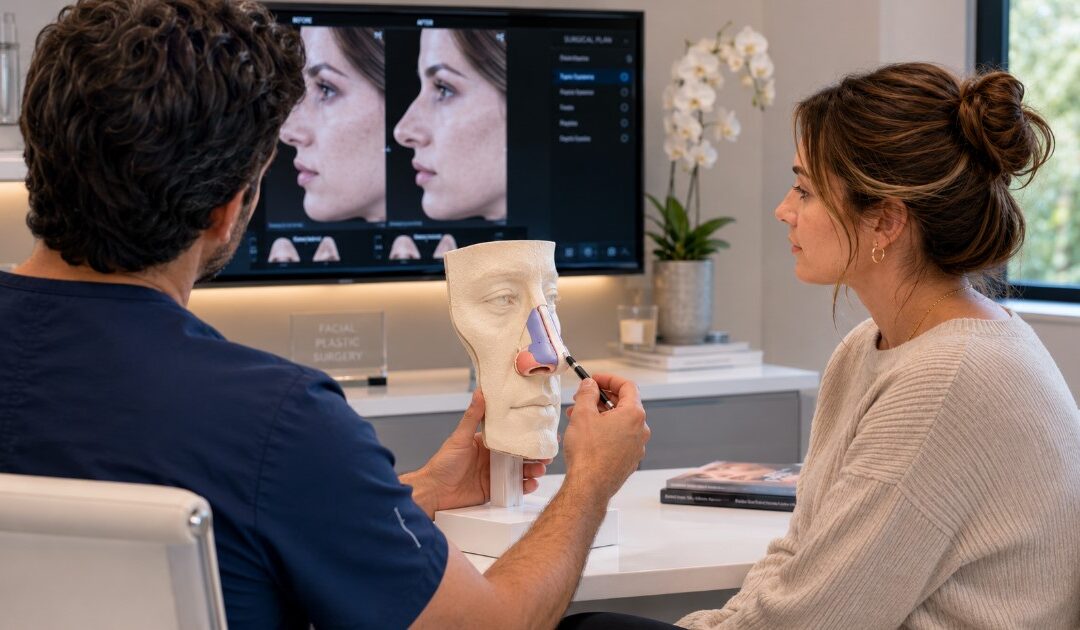
Rhinoplasty or nose surgery is often performed to improve breathing and facial appearance. While many surgeries heal successfully, that is not always the case. Some patients are left with breathing difficulties, uneven contours, or cosmetic effects that do not feel natural. When this happens, revision rhinoplasty may be recommended.
So, exactly what is revision rhinoplasty? It is a secondary surgical procedure performed to correct cosmetic, structural, or functional problems resulting from prior nose surgery. Unlike a primary rhinoplasty, revision procedures are far more complicated because surgeons must work around scar tissue, weakened cartilage, and changes from earlier healing.
This blog focuses on revision rhinoplasty: what it does, when it’s needed, the procedures used, and who makes a good candidate.
What Revision Rhinoplasty Corrects
A secondary procedure can improve both cosmetic appearance and nasal function when concerns remain following a previous rhinoplasty
- Cosmetic Imperfections
Some patients feel their nose appears overdone, uneven, too narrow, or out of balance with the rest of their face after healing.
- Breathing Difficulties
One of the most common reasons people seek revision rhinoplasty is ongoing breathing trouble. Internal collapse or weakened support can restrict airflow through the nose.
- Structural Damage
If too much cartilage or bone was removed during the first surgery, the nose may gradually lose support and shape over time.
- Nasal Asymmetry
Healing changes can leave the nose looking crooked or uneven from different angles.
- Over-Correct or Under-Correct Results
Some patients feel their nose was changed too dramatically, while others believe the first procedure made very little difference.
Signs You May Need Revision Rhinoplasty
Many patients only recognise problems once swelling from the first surgery has settled.
Usual signs include:
- Trouble breathing through the nose
- Dissatisfaction with appearance
- Crooked or uneven nose shape
- Pinched nasal tip
- Visible bumps or irregularities
- Emotional distress from poor results
These issues can affect confidence, sleep quality, and daily comfort.
Common Reasons Revision Rhinoplasty May Be Required
There are several reasons why patients may require another surgery.
- Surgical Complexity
Rhinoplasty is one of the most technically demanding facial procedures. Even when surgery is carefully planned, achieving both functional and cosmetic goals can be challenging
- Structural Changes Following Surgery
Poor structural support or excessive cartilage removal may affect both breathing and appearance.
- Scar Tissue Complications
Scar tissue can form unpredictably and alter the nose during recovery.
- Injury After Surgery
Trauma or accidental injury during healing may change the final result.
- Unrealistic Expectations
Good communication before surgery is important so patients understand realistic outcomes.
- Changes During Healing
The nose can continue changing for many months after surgery as swelling settles and tissues contract.
When Revision Rhinoplasty Is Recommended
Timing plays an important role in successful revision surgery. Operating too early can interfere with healing. Most surgeons wait for swelling to fully settle before reassessing the nose.
- Typical Waiting Period
Patients are generally advised to wait at least 12 months before undergoing another procedure.
- Situations Requiring Early Correction
Severe airway obstruction, infection, or structural collapse may require earlier treatment.
- How Surgeons Determine Timing
Surgeons assess swelling, scar tissue, cartilage strength, and overall nasal stability before recommending surgery.
Who Is a Good Candidate?
Patients considering revision rhinoplasty are usually suitable if they:
- Are in good physical health
- Have realistic expectations
- Experience functional nasal concerns
- Want cosmetic improvement
- Feel emotionally prepared for another recovery process
A thorough consultation is mandatory to assess suitability. During this, some patients may also ask about other facial procedures, such as a surgical brow lift or neck lift, or discuss surgical face lift cost to improve overall facial harmony.
Surgical Techniques Used
Because of the complexity of revision rhinoplasty, advanced reconstructive methods are often required.
- Open Revision Rhinoplasty
This approach uses a small incision between the nostrils to provide better visibility during surgery.
- Closed Revision Rhinoplasty
Minor corrections may sometimes be performed using hidden incisions inside the nose.
- Cartilage Grafting Methods
Cartilage grafts are frequently used to rebuild support. Dr Alan Evans regularly performs costal cartilage or rib grafting for complex cases.
- Structural Reconstruction
Some patients require rebuilding of collapsed nasal structures or correction of a weakened bridge.
- Scar Tissue Management
Careful handling of scar tissue is important for achieving smooth contours and stable healing.
Types of Revision Rhinoplasty
For patients considering rhinoplasty in Sydney, it often boils down to two types of surgical revision procedures:
Functional Revision Rhinoplasty
Functional revision surgery focuses on restoring comfortable breathing by:
- Improving airflow
- Correcting nasal obstruction
- Repairing collapsed nasal valves
- Combining function with cosmetic refinement
Cosmetic Revision Rhinoplasty
Cosmetic correction may involve:
- Refining the nasal tip
- Straightening the nose
- Correcting saddle nose deformity
- Enhancing facial balance and symmetry
Conclusion
Due to the complexity of revision rhinoplasty, careful assessment and experience in both nasal function and aesthetics are important considerations when selecting a surgeon . Every nose heals differently, and no two revision procedures are exactly the same.
With more than 30 years of ENT and reconstructive nasal surgery experience, Dr Alan Evans provides personalised treatment plans tailored to each patient’s goals and anatomy. He is also experienced in all types of ENT-related cosmetic procedures, including blepharoplasty in Sydney.
To arrange a consultation with Dr Alan Evans, call (02) 9526 8000 today.


